
….Why Fuerteventura Isn’t the Spot..Por qué Fuerteventura no es el lugar ideal….
….(and Where to Go Instead) ..(y adónde ir en su lugar)….
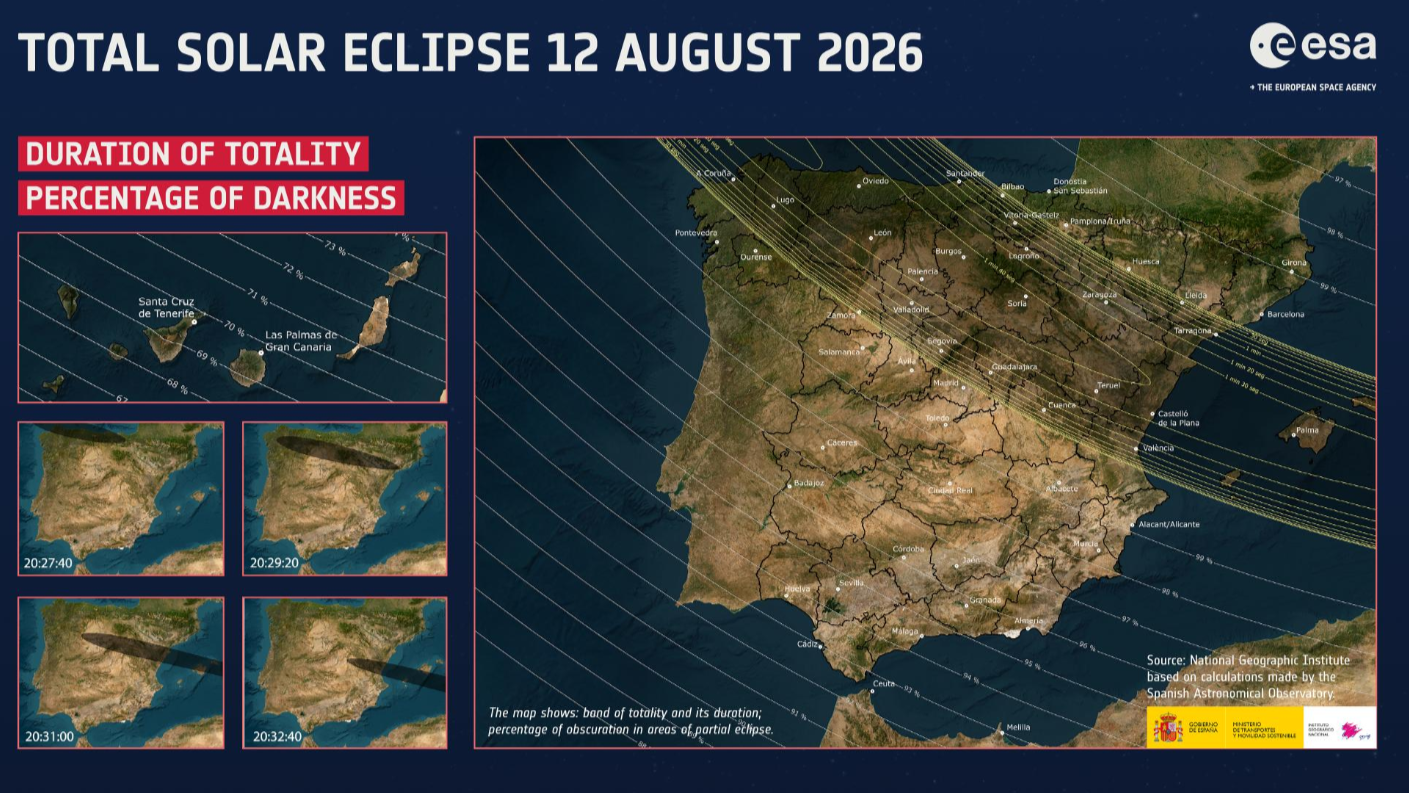
PHOTO: ESA
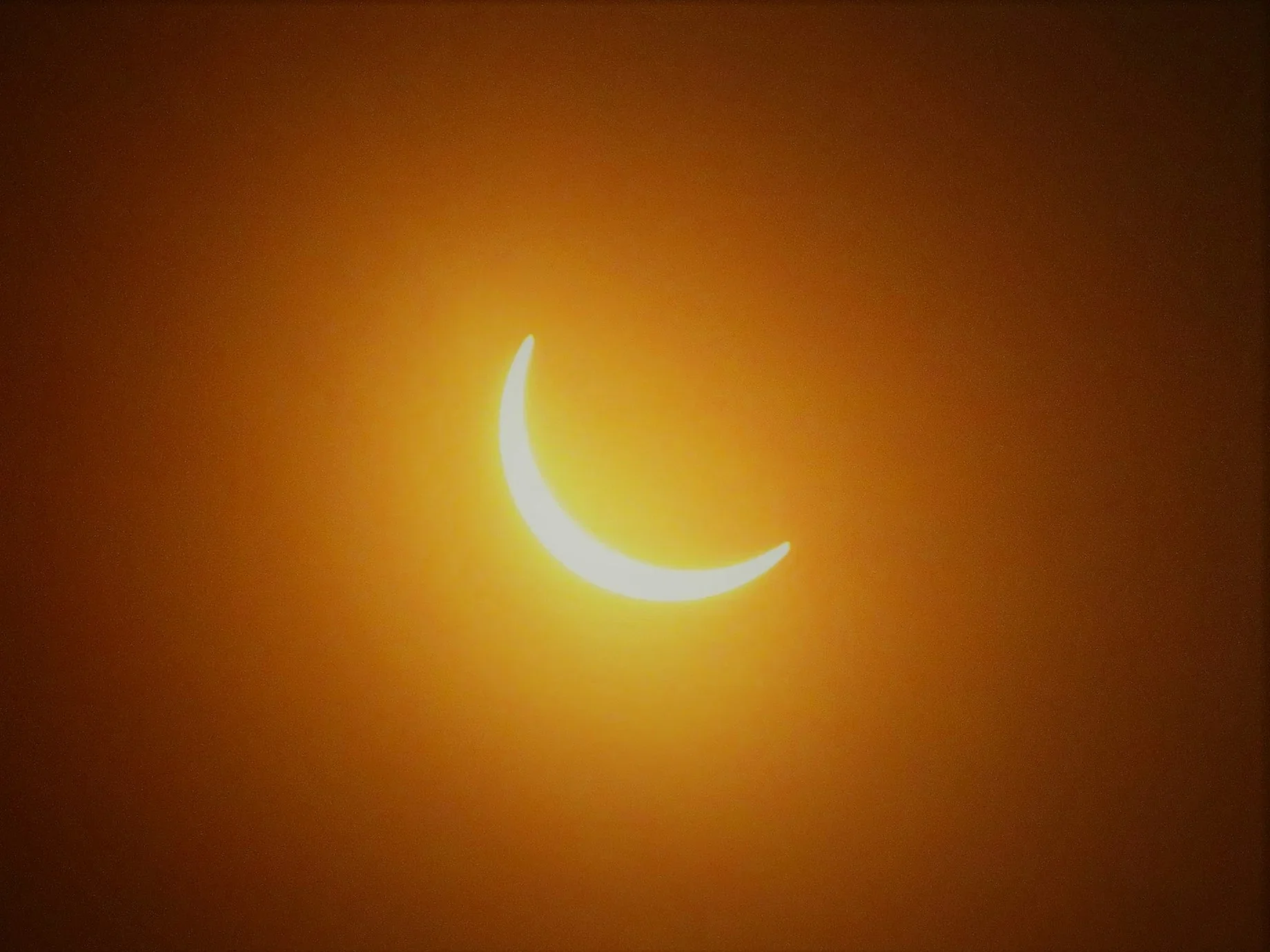
….A total solar eclipse occurs when the Moon passes directly between Earth and the Sun, temporarily blocking the Sun's light and casting a shadow on Earth. On August 12, 2026, one of the most anticipated astronomical events will take place, a total solar eclipse sweeping across Greenland, Iceland, and northern Spain. If you are currently in Fuerteventura or planning to view it from the island, here is what you need to know about the event and why you might want to travel if you're looking for total darkness.
The Reality for Fuerteventura: While the event is creating huge excitement across Europe, Fuerteventura is not a good place to observe this eclipse. There is no totality. The path of total darkness completely misses the Canary Islands. From Fuerteventura, we will only see a partial eclipse (around 66% to 74% coverage). .. Un eclipse solar total ocurre cuando la Luna se interpone directamente entre la Tierra y el Sol, bloqueando temporalmente la luz solar y proyectando una sombra sobre la Tierra. El 12 de agosto de 2026 tendrá lugar uno de los eventos astronómicos más esperados: un eclipse solar total que recorrerá Groenlandia, Islandia y el norte de España. Si te encuentras en Fuerteventura o planeas verlo desde la isla, aquí tienes lo que debes saber sobre el evento y por qué tal vez quieras viajar si buscas la oscuridad total. La situación en Fuerteventura: Aunque el evento está generando gran expectación en toda Europa, Fuerteventura no es un buen lugar para observar este eclipse. No habrá totalidad; la franja de oscuridad total no pasa por las Islas Canarias. Desde Fuerteventura, solo veremos un eclipse parcial (con una cobertura de entre el 66 % y el 74 %). ….
Photo: shutterstock.com
….Ancient Mythology & Meaning..Mitología y significado antiguos ….
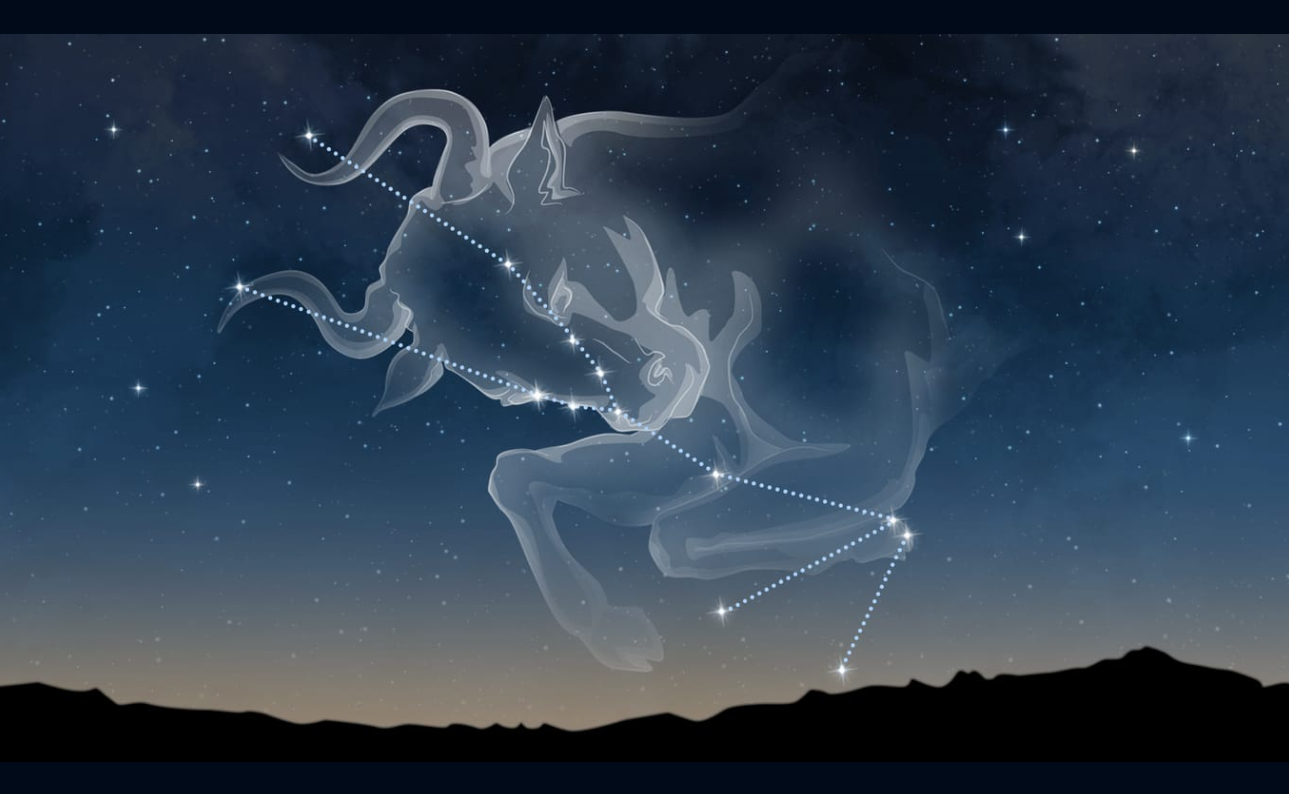
….For our ancestors, the sudden vanishing of the Sun was deeply unnerving. Across ancient cultures it was interpreted as a battle in the skies, a divine warning, or a cosmic monster devouring the light. .. Para nuestros antepasados, la repentina desaparición del Sol resultaba profundamente inquietante. En diversas culturas antiguas, este fenómeno se interpretaba como una batalla en los cielos, una advertencia divina o la acción de un monstruo cósmico que devoraba la luz. ….
….In ancient China, people believed a dragon was devouring the Sun, while Norse mythology blamed the sky wolves Sköll and Hati. The Maya, an eclipse was literally the "bite of the Sun," and in Hindu mythology, the severed head of the demon Rahu briefly swallowed it whole. The ancient Greeks, it signalled the Sun god abandoning humanity, hence giving rise to our word eclipse, which stems from the Greek word for abandonment (ekleipsis). .. En la antigua China, se creía que un dragón estaba devorando el Sol, mientras que la mitología nórdica atribuía el hecho a los lobos celestiales Sköll y Hati. Para los mayas, un eclipse era literalmente el “mordisco al Sol”, y en la mitología hindú, la cabeza cercenada del demonio Rahu lo tragaba entero por un breve instante. Para los antiguos griegos, señalaba que el dios Sol abandonaba a la humanidad; de ahí proviene nuestra palabra “eclipse”, derivada del término griego para “abandono” (ekleipsis) ….
….To aid the Sun in its darkest hour, many fought back with noise. The Chinese, as well as the Choctaw and Cherokee tribes, would shout, bang pots, and beat drums to scare off the celestial beast and coax the light back. .. Para ayudar al Sol en su hora más oscura, muchos combatían el fenómeno haciendo ruido. Tanto los chinos como las tribus choctaw y cheroqui gritaban, golpeaban ollas y tocaban tambores para ahuyentar a la bestia celestial y atraer de nuevo la luz. ….
….Not every culture reacted with noise. The Navajo, by contrast, viewed an eclipse as a sacred time for quiet reflection, rest, and inward prayer. .. No todas las culturas reaccionaban haciendo ruido. Los navajos, por el contrario, consideraban el eclipse como un momento sagrado para la reflexión silenciosa, el descanso y la oración interior. ….
….As early astronomers learned to forecast these movements, eclipses gradually shifted from terrifying omens of doom into predictable natural events. .. A medida que los primeros astrónomos aprendieron a predecir estos movimientos, los eclipses pasaron gradualmente de ser presagios aterradores de catástrofe a convertirse en fenómenos naturales predecibles. ….
If you're staying on Fuerteventura on August 12, 2026, keep your expectations modest, it will be a subtle partial show low on the western horizon. But if you're willing to hop a flight up to northern Spain, you'll be treated to one of nature's greatest spectacles!
..
Si te encuentras en Fuerteventura el 12 de agosto de 2026, modera tus expectativas: será un eclipse parcial sutil, visible cerca del horizonte occidental. Pero si estás dispuesto a tomar un vuelo hacia el norte de España, ¡podrás presenciar uno de los espectáculos más grandiosos de la naturaleza! ….
….It will be too Close to Sunset. .. Será demasiado cerca del atardecer. ….
….The eclipse occurs very late in the day. By the time maximum coverage is reached, the Sun will be sitting extremely low on the horizon, just before setting. Due to the low angle it will be difficult to notice a dramatic change in light or appreciate the grandeur of the event. ..
El eclipse ocurre muy tarde en el día. Para cuando se alcance la cobertura máxima, el Sol estará extremadamente bajo en el horizonte, justo antes de ponerse. Debido a este ángulo bajo, será difícil percibir un cambio drástico en la luz o apreciar la magnificencia del evento. ….
….Where IS a good place to see it? ..¿Dónde es un buen lugar para verlo? ….
….If you want the full, mind-bending experience of day turning into night, you need to be in the Path of Totality. The prime viewing spots for total darkness include: ..
Si quieres vivir la experiencia completa e impresionante de ver cómo el día se convierte en noche, debes estar en la franja de totalidad. Los mejores lugares para observar la oscuridad total incluyen: ….
….Northern and Eastern Spain: .. Norte y este de España: ….
….Regions stretching from Galicia through Asturias, León, Zaragoza, and down to Valencia and the Balearic Islands will experience 1 to 2 minutes of complete totality right before sunset. .. Las regiones que se extienden desde Galicia, pasando por Asturias, León y Zaragoza, hasta llegar a Valencia y las Islas Baleares, experimentarán entre 1 y 2 minutos de totalidad completa justo antes del atardecer. ….
….Mallorca will be one of the final landmasses in Europe to see totality, offering 1 minute and 36 seconds of dark eclipse over the Mediterranean Sea.
For those wanting to photograph it, Simon Waldram is leading a total eclipse and astrophotography workshop based in Mallorca, taking advantage of its Starlight Reserve skies and coastal views. .. Mallorca será una de las últimas zonas de tierra firme en Europa donde se podrá observar la totalidad, ofreciendo 1 minuto y 36 segundos de oscuridad durante el eclipse sobre el mar Mediterráneo. Para quienes deseen fotografiarlo, Simon Waldram dirige un taller de eclipse total y astrofotografía con sede en Mallorca, aprovechando sus cielos con certificación Starlight y sus vistas costeras. ….
….Iceland & Greenland: Western Iceland and eastern Greenland sit directly under the path.
Modern Science
To modern observers, a total solar eclipse is a showcase of orbital mechanics. It gives scientists a rare window to study the Sun's outer atmosphere (the corona), which is normally blotted out by surface glare. .. Islandia y Groenlandia: el oeste de Islandia y el este de Groenlandia se encuentran directamente bajo la trayectoria. Ciencia moderna Para los observadores actuales, un eclipse solar total es una demostración de mecánica orbital. Ofrece a los científicos una oportunidad excepcional para estudiar la atmósfera exterior del Sol (la corona), la cual normalmente queda oculta por el resplandor de la superficie. ….
….Beyond solar physics, eclipses have shaped our understanding of the universe. In 1919, it provided the first proof of Einstein’s Theory of General Relativity, by showing that gravity bends starlight. Today, researchers continue to leverage eclipses to track sudden shifts in Earth’s ionosphere, measure microclimate drops, and record animal behaviour as day briefly turns to night. .. Más allá de la física solar, los eclipses han moldeado nuestra comprensión del universo. En 1919, proporcionaron la primera prueba de la teoría de la relatividad general de Einstein al demostrar que la gravedad curva la luz de las estrellas. Hoy en día, los investigadores siguen aprovechando los eclipses para monitorear cambios repentinos en la ionosfera terrestre, medir descensos en el microclima y registrar el comportamiento animal a medida que el día se convierte brevemente en noche. ….